Friday, February 7, 2020

Business ethics

Bad Business Ethics

Publicly owned businesses must determine how to best serve the interests of their shareholders while also maintaining strong business ethics. Below we will list some real examples of unethical behavior in business including some of the largest companies in the world.

McDonald’s
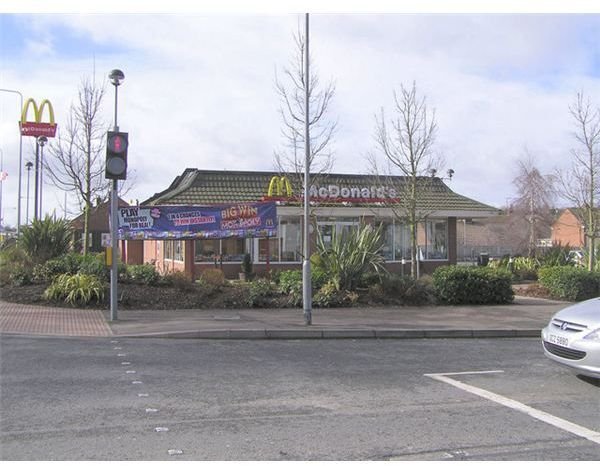

Real examples of unethical behavior in business - McDonald's
McDonald’s is just one example of a company with a history bad business ethics
Very often, a company’s relationship with its shareholders defines its ethical values. McDonald’s, despite its global success, remains the target of a vitriolic public backlash owing to what many perceive as bad business ethics in its relationships with employees and other stakeholders.
This bad business ethics example by McDonald’s is what is known as the “McDonald’s Legislation” in popular parlance. In 1972, Ray Kroc, the company’s founder made a rare donation of $250,000 to Nixon’s reelection campaign and in return got a favorable legislation that allowed companies such as McDonald’s to pay teenage employees 20 percent less than federal minimum wages. Most observers consider this a typical case of corporate influence on lawmakers to enact legislation that serve their selfish ends and harm society.
McDonald’s also doesn’t allow employees to unionize, and in one instance where workers at St. Hubert, Quebec did form a union, the company closed down the unit promptly.
The McLibel case ranks as one of McDonald’s most disastrous cases of bad business ethics and spawned tons of negative publicity. Between 1986 and 1990, activists of London Greenpeace distributed pamphlets with the title “What’s Wrong with McDonald’s Everything They Don’t Want You to Know” and the wordings “McDollars, McGreedy, McCancer, McMurder, McProfits, McGarbage,” alleging that McDonald’s promoted Third World poverty, sold unhealthy food, exploited workers and children, tortured animals, and destroyed the Amazon rain forest. McDonald’s sued the group for libel. The court, however, held McDonald’s guilty of exploiting children through advertising tactics, serving dangerously unhealthy food, paying workers low wages, indulging in union busting activities worldwide, and ignoring animal cruelty perpetrated by its suppliers.
According to me this is an unethical to me..

Walmart facing an issue

Walmart has been under fire for their mistreatment of employees and low wages for many years, and Smith's experiences highlight the brutal and unjust conditions that Walmart employees must endure.
Smith's story has remained consistent regarding the incident on Nov. 6 since the story broke in mid-November. However, the head honchos at Walmart have changed their reasons for firing Smith twice since the story broke. When the story was first published in the Times Union, Aaron Mullins, a spokesperson for Walmart, said he could not discuss Smith's firing, as it was a personnel issue.
Yet when the story gained national attention after it was covered in the Washington Post, Mullins responded, stating that Smith was fired because he redeemed bottles that were returned to customer service by other Walmart customers. Essentially, Mullins argued that the $5.10 that Smith redeemed was "property" of Walmart, and in redeeming the cans, Smith stole from the company. Bear in mind the fact that Walmart is one of the largest employers in the United States, with $482.2 billion in net sales during the last fiscal year.
Just a few days after Mullins' response to the Washington Post, Michelle Malashock, who works for Walmart's communications department, admitted that Smith was fired because he didn't admit his previous criminal charges during the application process. Smith claims he told his interviewer that he had been convicted of robbery and that they performed a background check on him before he was hired.
While the inconsistencies at the executive level are a bad reflection on Walmart and a nightmare for public relations, the worst part of the Smith controversy is the lack of compassion that administrators at Walmart show for their employees. Thomas Smith was formerly homeless and does not own a car. He is clearly trying to turn his life around; he currently lives at the St. Charles Lwanga Center, a halfway house in Albany, which helped him to apply for the job at Walmart. Smith redeemed the cans not because he wanted to steal from the corporation that pays him minimal wages, but because he thought the cans were left as trash. He was unaware that he couldn't take empty bottles.
On top of all of that, what does $5 matter to a company that makes over $400 billion dollars in net sales every year Is it really worth firing a man who may have needed the $ more than any Walmart executive ever could? It is shameful that those at the top of the corporations that employ so many in our country are not compassionate enough to consider the lives or the challenges that their employees might be facing.
According to me this is an unethical issue.